UNCCD COP17 On Site | From Community Action to Global Impact: China’s Experience in Synergizing Grassland Governance and Climate Change Response
On August 19, 2026, the side event “China’s Experience in Synergizing Community Participation in Grassland Governance and Climate Change Response” was successfully held at the China Pavilion during the seventeenth session of the Conference of the Parties to the United Nations Convention to Combat Desertification (UNCCD COP17) in Ulaanbaatar, Mongolia.
The side event was hosted by the Beijing Haidian Shanshui Conservation Center, and co-hosted by the Gansu Green Camel Bell Environmental Development Center, Xilin Gol League AEI Public Welfare and Environmental Protection Volunteer Association, West Ujimqin Banner Pastoral Area Information Service Center, Inner Mongolia Churiya Pastoral Ecological Research Center, Ant Forest Foundation, Oxfam, Caodu Group, and the Global Environment Facility Small Grants Programme (GEF SGP) under United Nations Development Programme (UNDP) , among others. Experts, representatives of social organizations, and community practitioners from China, Mongolia, and relevant international institutions gathered together to exchange viewson community participation, grassland governance, climate change adaptation, and sustainable livelihoods, and to jointly explore community-based approaches to ecological governance in arid and semi-arid regions.
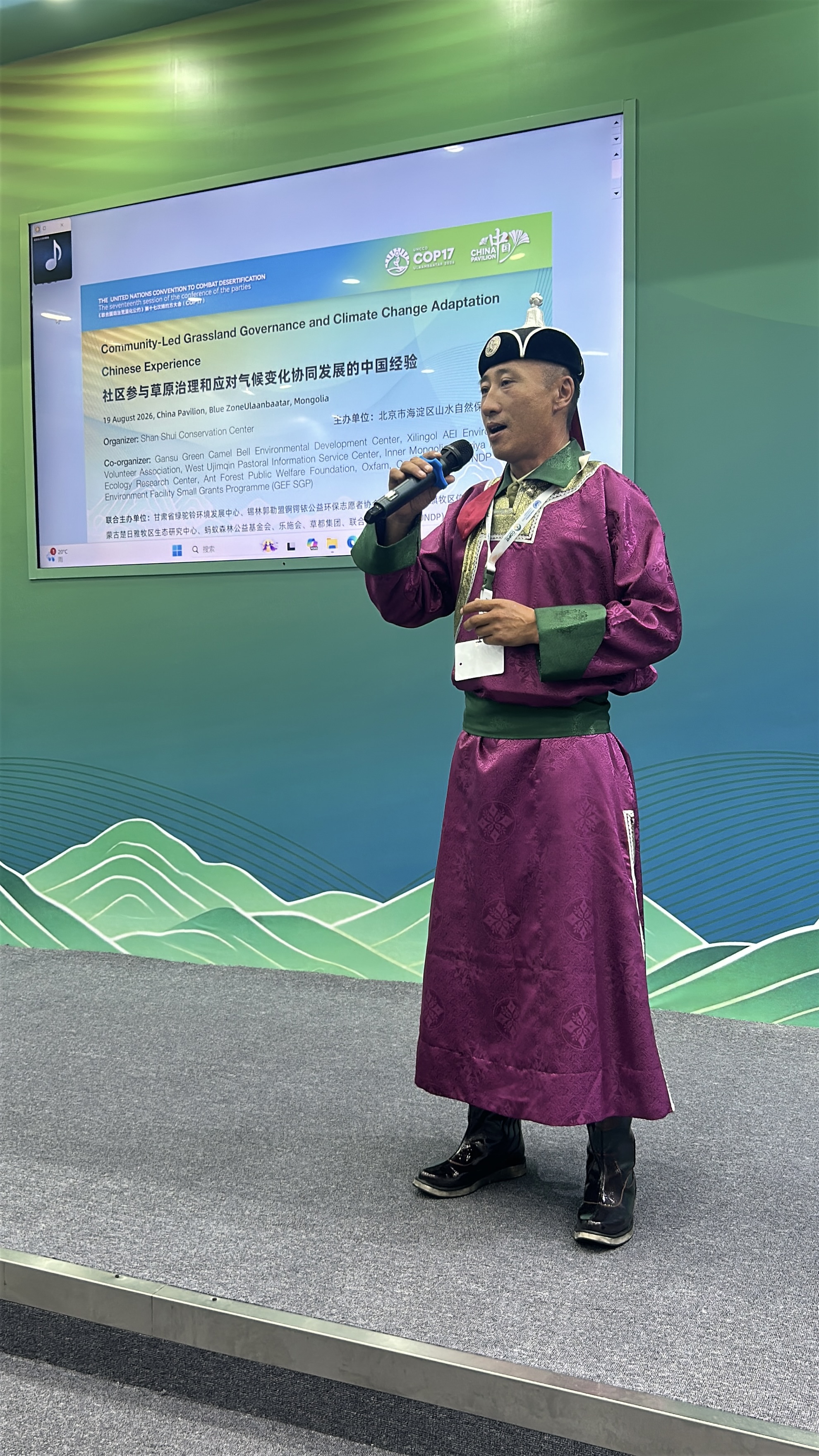
The opening performance was given by Wuritu, an inheritor of the Mongolian long-song intangible cultural heritage from Inner Mongolia, who performed a Mongolian long song. The long and melodious singing brought us back to the grasslands.
Starting from Global Challenges: Making Communities an Important Force in Ecological Governance
In her opening remarks, Liu Yi, Programme Management Specialist at the Environment and Energy Department of the UNDP Asia-Pacific Regional Centre and Regional Coordinator of GEF SGP Asia-Pacific, noted that arid and semi-arid regions are facing the dual challenges of land degradation and climate change. In the face of increasingly severe ecological risks, strengthening the participation of local communities and Indigenous Peoples in land governance and resilience building is becoming an important direction for global ecological governance.
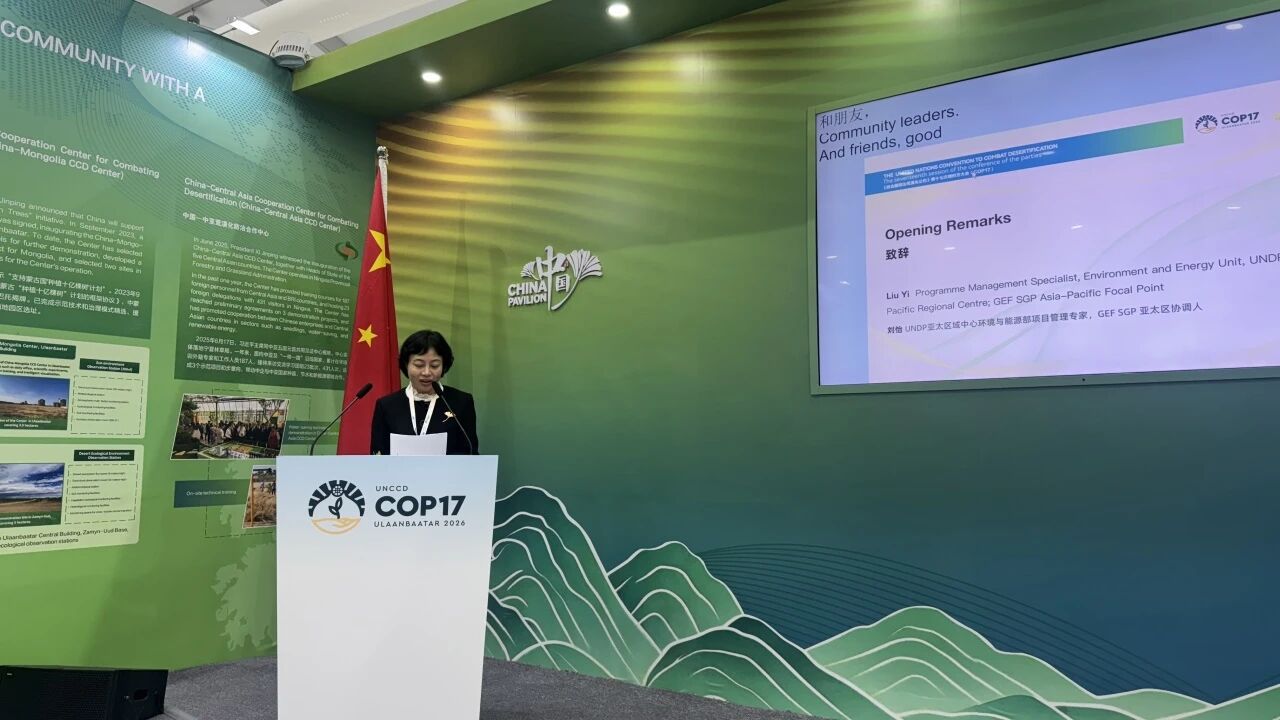
Liu Yi, Programme Management Specialist at the Environment and Energy Department of the UNDP Asia-Pacific Regional Centre and Regional Coordinator of GEF SGP Asia-Pacific, delivering opening remarks
Shi Xiangying, Executive Director of the Shanshui Conservation Center, introduced the development and practices of community conserved areas in China’s pastoral areas. She noted that, against the backdrop of the continued advancement of China’s ecological civilization development and desertification control strategies, China has gradually developed a multi-stakeholder collaborative model involving government guidance, participation by social organizations, and community- and pastoralist-led practice. Around systems such as the protection of basic grasslands, grass-livestock balance, grazing bans and seasonal grazing restrictions, and grassland ecological compensation, China has continuously improved its grassland ecological protection system, while also providing a policy foundation for community participation in grassland governance.

Shi Xiangying, Executive Director of the Shanshui Conservation Center, sharing her presentation
According to the data, 117 community conserved area cases have been collected so far, including 22 community conserved areas in pastoral areas, covering a total area of 1.337 million hectares. Six of these cases have been assessed as basically meeting the criteria for OECMs (Other Effective Area-Based Conservation Measures), covering 109,000 hectares. Diverse practices, including community co-management, self-governance and self-management, sustainable grazing, restoration of degraded grasslands, species conservation, community monitoring, and livelihood transformation among pastoralists, are becoming an important part of grassland ecological conservation in China.
China-Mongolia Dialogue: Finding Common Answers through Different Governance Pathways
Grassland ecosystems do not follow national borders. Inner Mongolia and Mongolia share similar ecological environments and pastoral cultures, while also facing common challenges such as climate change, grassland degradation, and extreme weather.
Narangaowa from the Inner Mongolia Churiya Pastoral Ecological Research Center introduced different grassland governance practices in the two countries from a comparative China-Mongolia perspective. China relies more on policy-driven approaches and ecological projects, promoting grassland restoration through measures such as grazing withdrawal and grassland restoration, as well as grassland ecological compensation. Mongolia, meanwhile, has developed a governance pathway combining policy constraints with community autonomy. Pasture User Groups (PUGs) determine grazing areas and establish rotational grazing rules through democratic consultation.
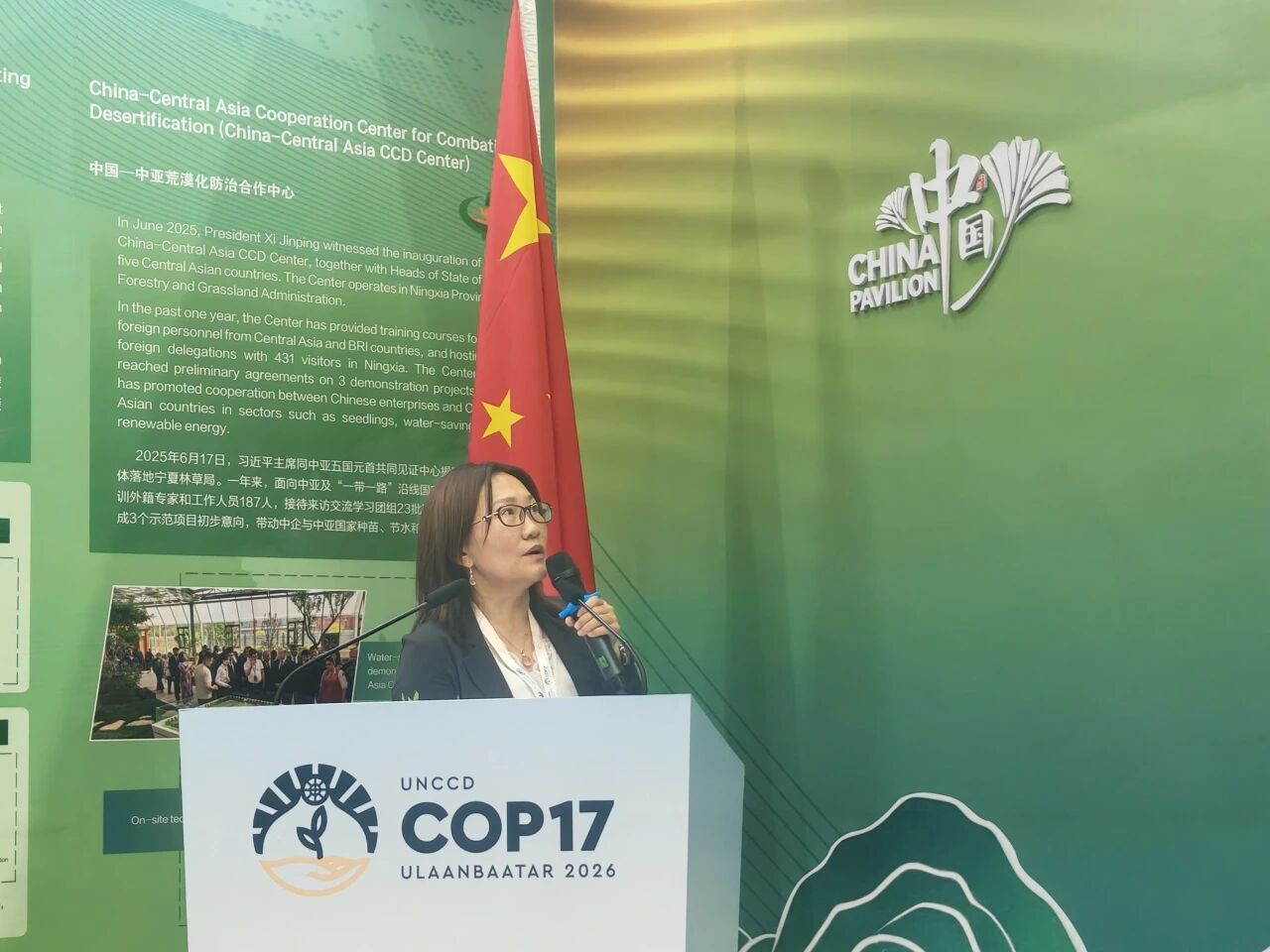
Narangaowa from the Inner Mongolia Churiya Pastoral Ecological Research Center sharing her presentation
Behind these different governance mechanisms also lies a common ecological wisdom — “mobility.” Whether it is flexible movement between pastures in traditional nomadic pastoralism or dynamic monitoring and resource coordination in modern governance, adapting management approaches to local conditions and adjusting them in response to environmental changes are important capacities for pastoral areas to respond to climate risks. Participants suggested that China and Mongolia could further carry out joint cross-border monitoring, ecological technology exchanges, the development of ecological conservation corridors, and exchanges on traditional ecological knowledge in the future, so as to move cross-border grassland ecological conservation from shared concepts toward deeper practical cooperation.
From “Grass Bank” to Community Co-management: Exploring Grassroots Practices for Climate Adaptation
In the face of extreme weather events such as drought, snow disasters, and locust outbreaks, how to enhance the climate adaptation capacity of pastoral communities was an important issue addressed at the side event.
Bayar, Director of the West Ujimqin Banner Pastoral Area Information Service Center, shared the experience of the “Grass Bank” in Bayan Wendur Gacha. Relying on 117 pastoral households and 540,000 mu of grassland, the local community established a shareholding economic cooperative that combines forage reserves with community organization, financial services, and ecological conservation. Forage is dynamically stored and rotated at a level equivalent to 10%–15% of the livestock inventory. When disasters occur, forage is supplied at prices 15%–20% below the market price, while mechanisms such as “forage loans,” hay exchange, and incentive points are also being explored.
A “Grass Bank” connects more than just forage; it connects an entire community risk-resilience network. Pastoralists gain stable forage security, the cooperative strengthens its service capacity, and the government and society gain more effective tools for disaster prevention and mitigation. At the same time, reducing overgrazing during disaster periods helps lower pressure on grassland ecosystems.
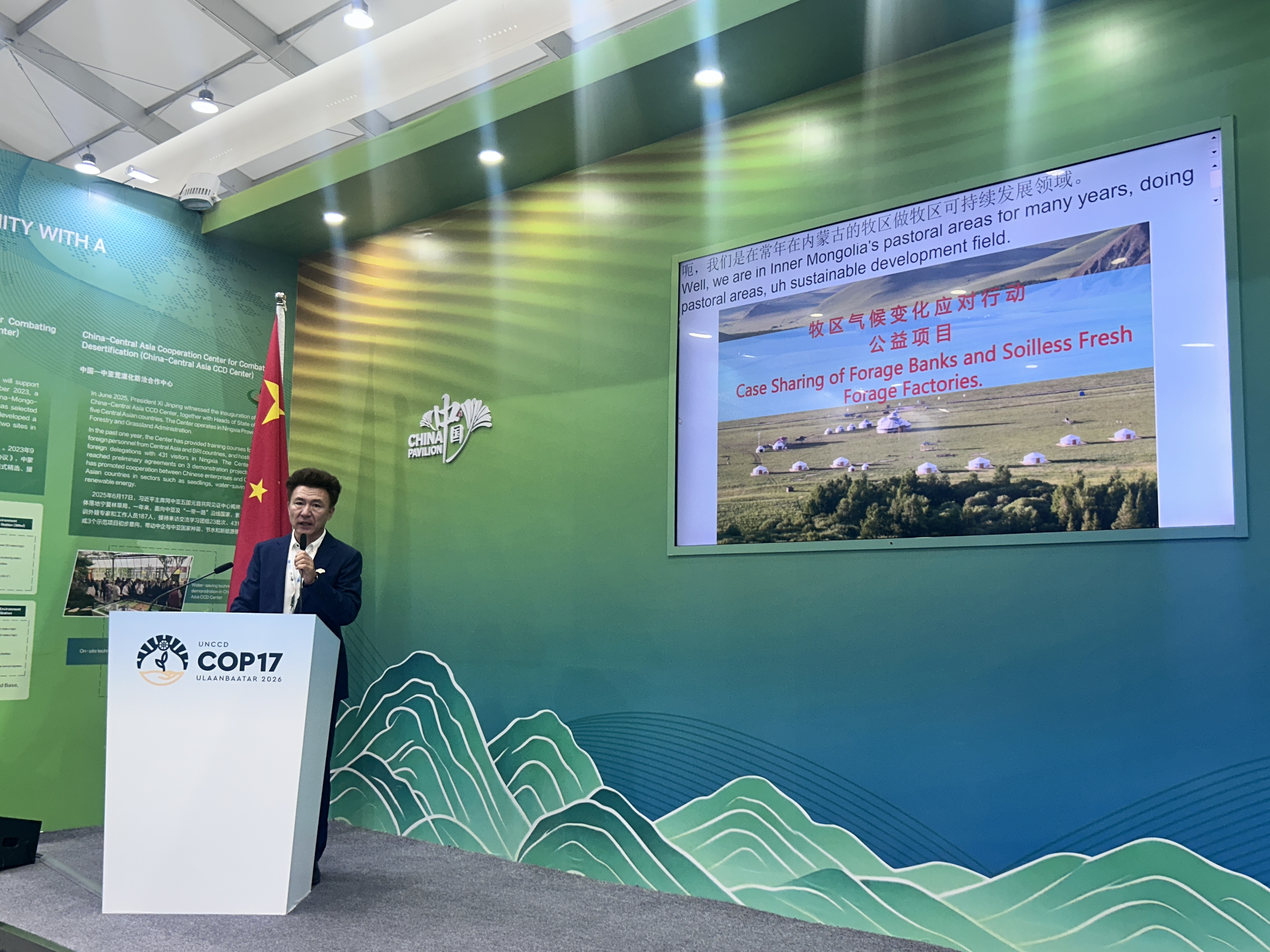 Bayar, Director of the West Ujimqin Banner Pastoral Area Information Service Center, sharing his presentation
In the Sanjiangyuan region of Qinghai, communities have likewise become an important force in ecological restoration and climate monitoring. Wang Yiliao from the Shanshui Conservation Center introduced community conservation practices in Gyatong and Nyanpo Yutse. Local pastoralists independently determine areas for grassland restoration and management approaches through community co-management committees. Combined with scientific species selection, enclosure-based restoration, and local techniques such as mixing seeds with cattle dung, they have completed the restoration of 150 hectares of degraded grassland, allowing high-quality forage grasses to grow again on what was once degraded.
At the same time, local pastoralists have transformed from users of the grasslands into recorders of ecological change. Since 2004, pastoralists have continuously conducted glacier monitoring, gradually developing from initially marking locations with stones to using GPS positioning and image recording. In 2025, they filmed the documentary Monitoring the Snow Mountains, documenting changes in high-altitude glaciers in their own way.
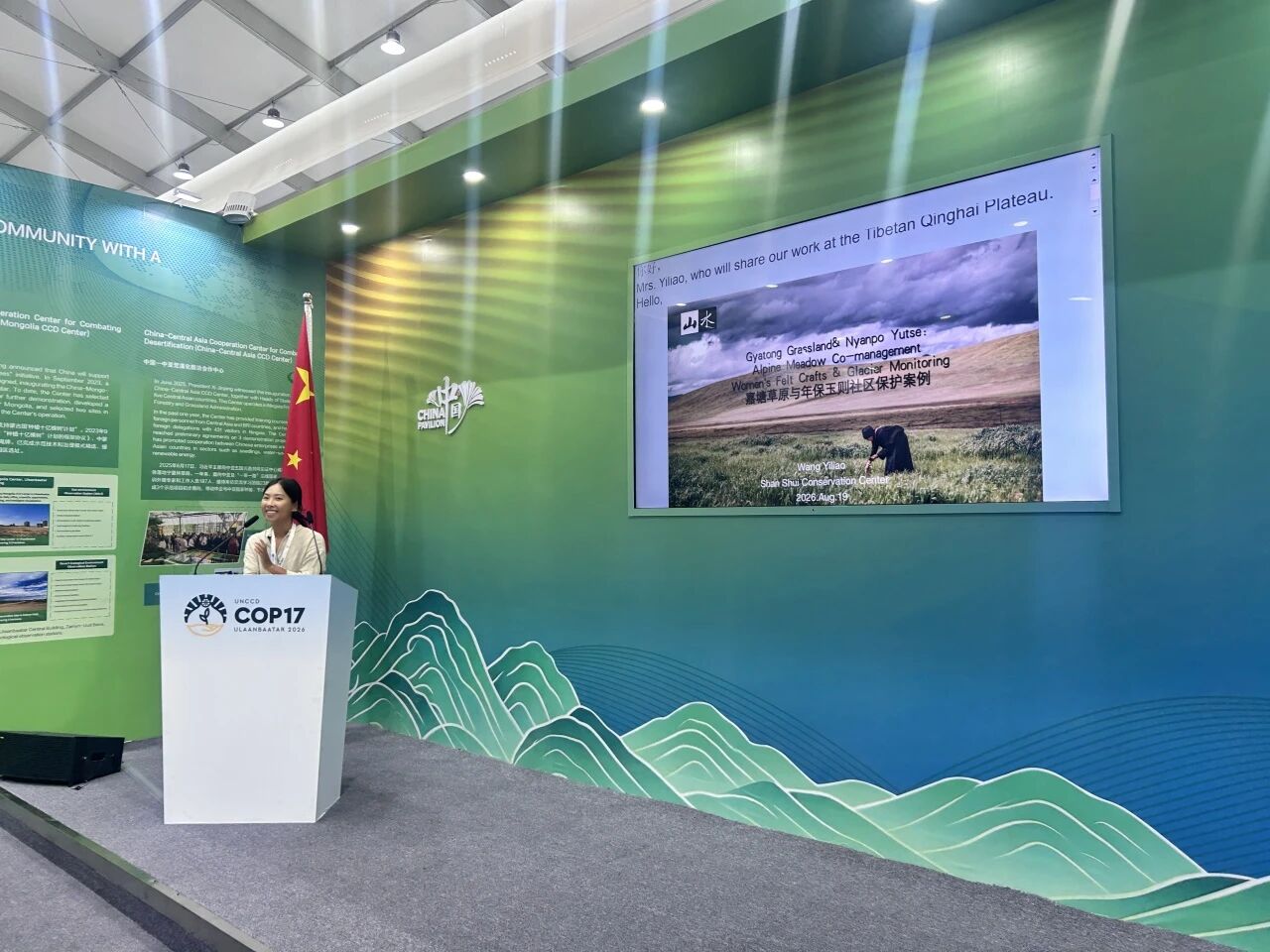 Wang Yiliao from the Shan Shui Conservation Center introducing community conservation practices in Gyatong and Nyanpo Yutse
Turning Conservation into Livelihoods: Bringing Ecological Value into Community Life
Ecological conservation does not have to be separated from community development; it can become a new source of livelihoods.
In Gyatong, Qinghai, the Dengjialacuo Agricultural and Animal Husbandry Professional Cooperative combines traditional felt-making techniques with modern design. Drawing inspiration from highland wildlife, it has developed a women’s handicraft industry. Since its establishment in 2021, its turnover has exceeded RMB 280,000.

Some handicraft products from the Gyatong women’s group
In the Hunshandake Sandy Land of Inner Mongolia, the Xilin Gol League A’e Yi Public Welfare and Environmental Protection Volunteer Association has explored an integrated “grassland–wetland–sandy land–migratory bird” conservation model. In response to the practical needs of conserving habitats for rare birds such as the white-naped crane and red-crowned crane while supporting community development, the project has transformed pastoralists from “bystanders” in ecological conservation into “participants.” Through bird protection teams, nature education, ecotourism, homestays, and cultural and creative products, it has created positive interactions between ecological conservation and the local community economy.
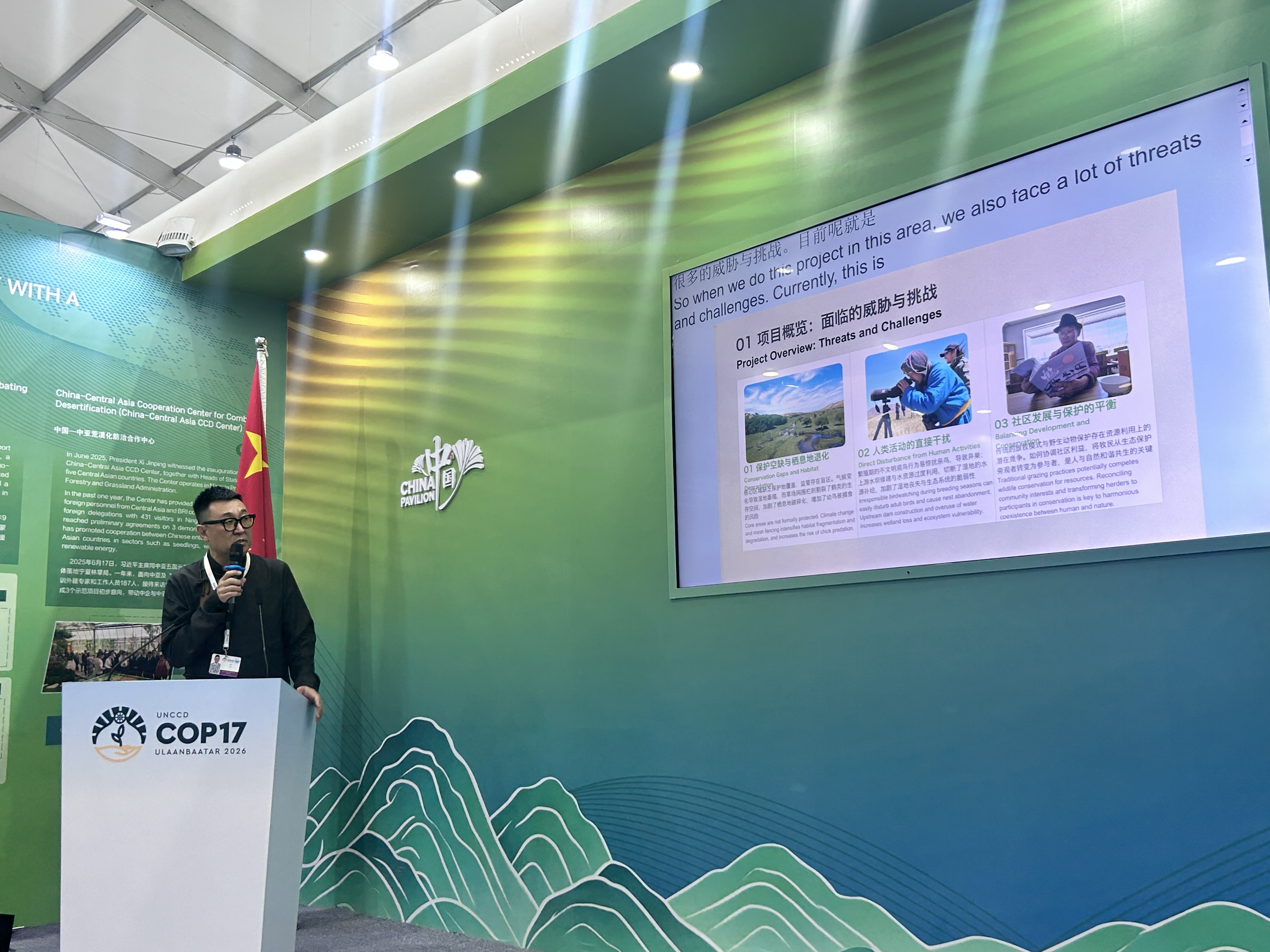 Bai Jin of the Xilin Gol League AEI Public Welfare and Environmental Protection Volunteer Association sharing the experience
Hu Yulong, a practitioner with more than two decades of experience in ecological governance; Wang Guobiao, who transformed from a hunting enthusiast into a key member of the bird protection team; Yiboletu, who returned to his hometown to operate a grassland homestay while participating in migratory bird conservation; and Aonisu, who conducts nature education for children, have become vivid community actors within this model. Their stories show that truly lasting ecological conservation requires communities to shift from being “objects of protection” to becoming “actors of conservation,” and also requires ecological value to be genuinely transformed into tangible and accessible benefits for communities.
The practice in the Maqu grasslands of Gansu further demonstrates the possibility of combining ecological conservation with clean energy and sustainable livelihoods. Zhao Zhong, Director of the Gansu Green Camel Bell Environmental Development Center, introduced that since 2005, the project has continuously promoted community co-management of natural resources while developing ecotourism and environmentally friendly industries. In Karsi Community, ecotourism income increased from RMB 5,600 in 2016 to RMB 30,000 in 2021. At the same time, distributed solar power generation has gradually been applied to electric cooking equipment, electric heating, electric water pumps, electric fencing, and livestock product processing, providing highland pastoral areas with low-carbon and convenient energy solutions.
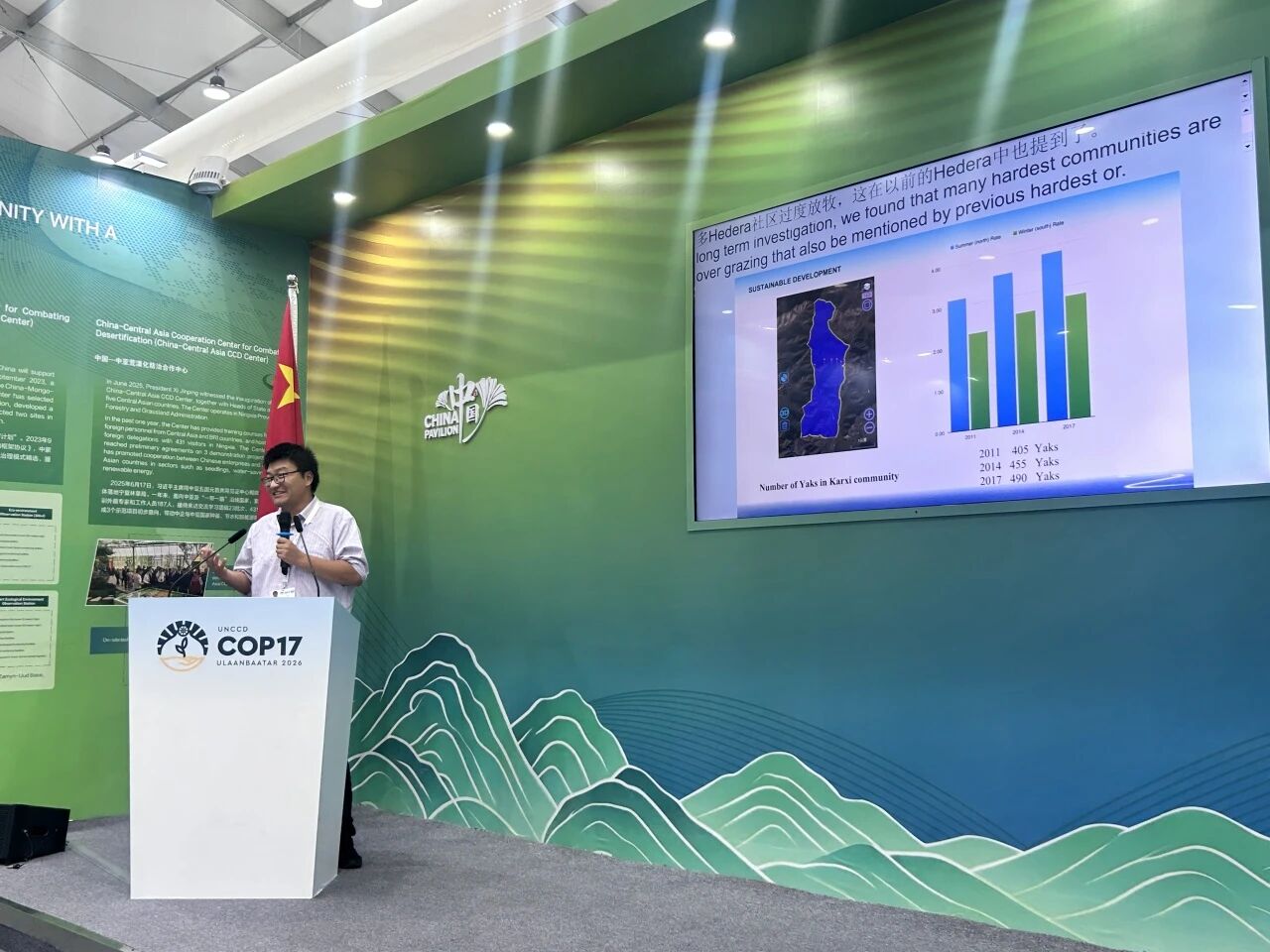
Zhao Zhong, Director of the Gansu Green Camel Bell Environmental Development Center, sharing his presentation
From China’s Experience to Global Cooperation: Building a Resilient Future for Grasslands Together
Tugsbuyan Munkhbayar, a representative of the Mongolian Nature Heritage Foundation, introduced Mongolia’s “Eternal Mongolia” project and its mechanisms for community-based natural resource management and sustainable financing. He proposed providing long-term financial support for nature conservation and community development through diversified approaches, including protected-area entrance fees, natural resource use fees, biodiversity credits, and green loans.
 Tugsbuyan Munkhbayar, representative of the Mongolian Nature Heritage Foundation, sharing the experience
Ykhanbai Hijiaba, a representative of the Mongolian Association for Environment and Development (JASIL), subsequently shared Mongolia’s twenty years of experience in community-based natural resource management (CBNRM). He explained that the core of the CBNRM model lies in multi-institutional collaboration, bottom-up participation, and learning through practice, with a focus on grassroots community organizations such as Pasture User Groups (PUGs) and Forest User Groups (FUGs). To date, 1,509 CBNRM groups have been established across Mongolia, covering approximately 81,600 pastoral households. These groups participate substantially in the management of approximately 30 million hectares of pastureland through pasture-use contracts signed with local governments. This “bottom-up” pathway of community governance provides valuable experience and reference for cross-border cooperation on grassland governance.
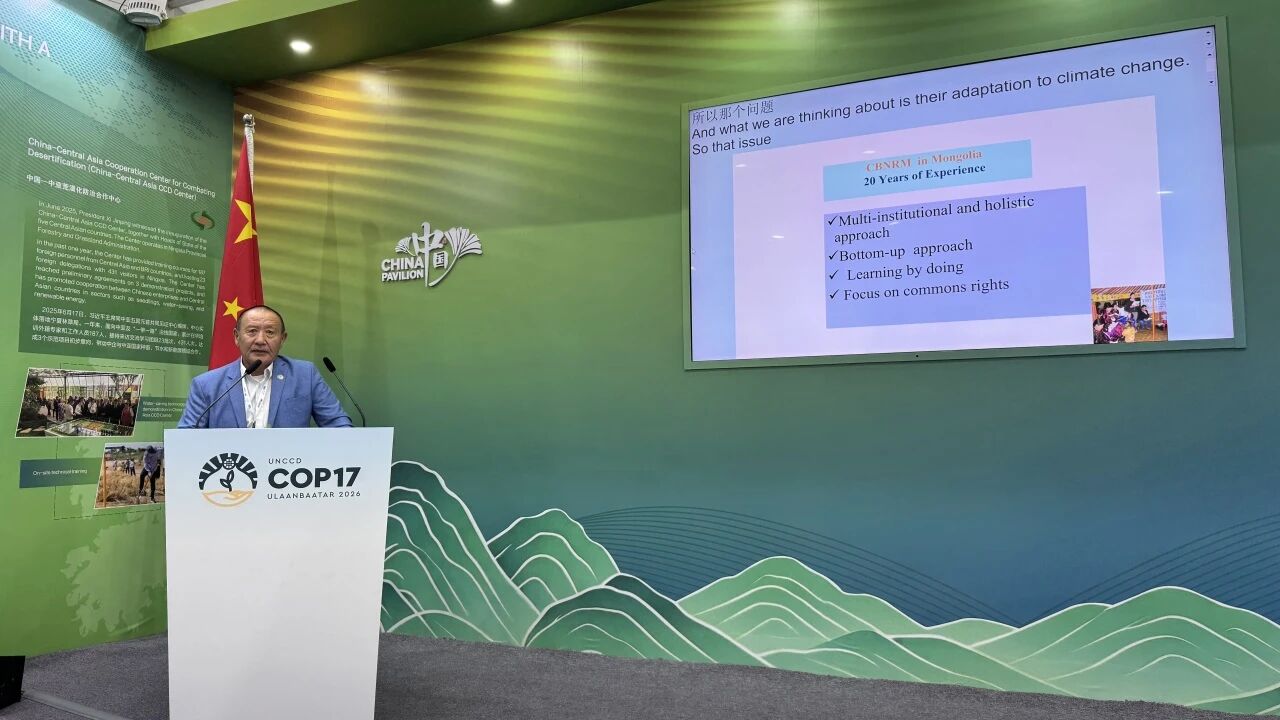 Ykhanbai Hijiaba, representative of the Mongolian Association for Environment and Development (JASIL)
From China’s policy-driven approaches and community co-management to Mongolia’s community autonomy and Pasture User Groups; from grass banks and grassland restoration to glacier monitoring, bird protection teams, and clean energy, although practices in different regions follow different pathways, they all point to one core principle: the resilience of ecological governance must ultimately be built upon community participation, knowledge, and action.
From a patch of grassland and a grass bank to a bird protection team and a group of glacier recorders, the power of ecological governance is growing from within communities and, through cross-regional and cross-border exchanges, converging into a shared force for addressing global environmental challenges. Looking ahead, the participating parties will continue to promote the exchange and sharing of community experiences, support grassland communities in strengthening their climate resilience, explore more pathways for synergy among biodiversity conservation, improved community livelihoods, and climate change response, and jointly safeguard a resilient future in which people and nature live in harmony.
We would like to thank the above partners, as well as the China Pavilion of UNCCD COP17 and the Department of Desertification Control of the National Forestry and Grassland Administration for their strong support for this side event.
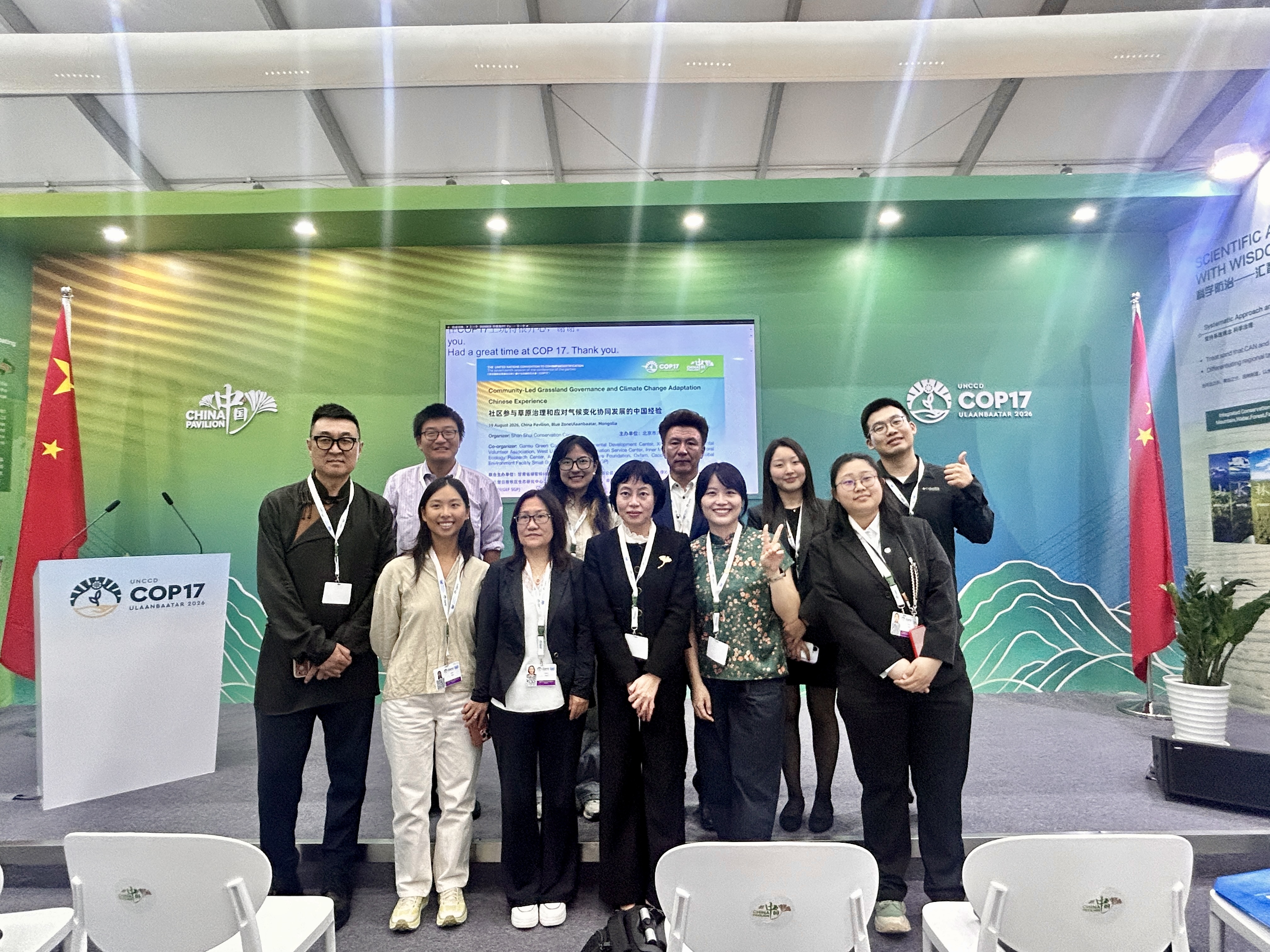
Group photo
-END-
Correspondent / Yuan Zishu
Layout / Zhao Boya
This article is from the Shanshui Conservation Center. Reproduction or citation without authorization is prohibited.
For inquiries, please leave a message through the official account or contact contact@shanshui.org.