Harvesting for the Birds at the Wenyu River
A little background: This spring and summer, we planted a small field in Wenyu River Park to provide food and shelter for insects and birds, while helping keep invasive species from taking over.
We planted foxtail millet and broomcorn millet, two traditional grain crops that can grow well in dry, poor soil, alongside soybeans, which help enrich the soil and keep moisture in the ground. We also planted corn along both sides of the field to create a tall windbreak. The stalks will be left standing through winter. Together, these crops provide birds with a changing supply of food from late summer through winter.
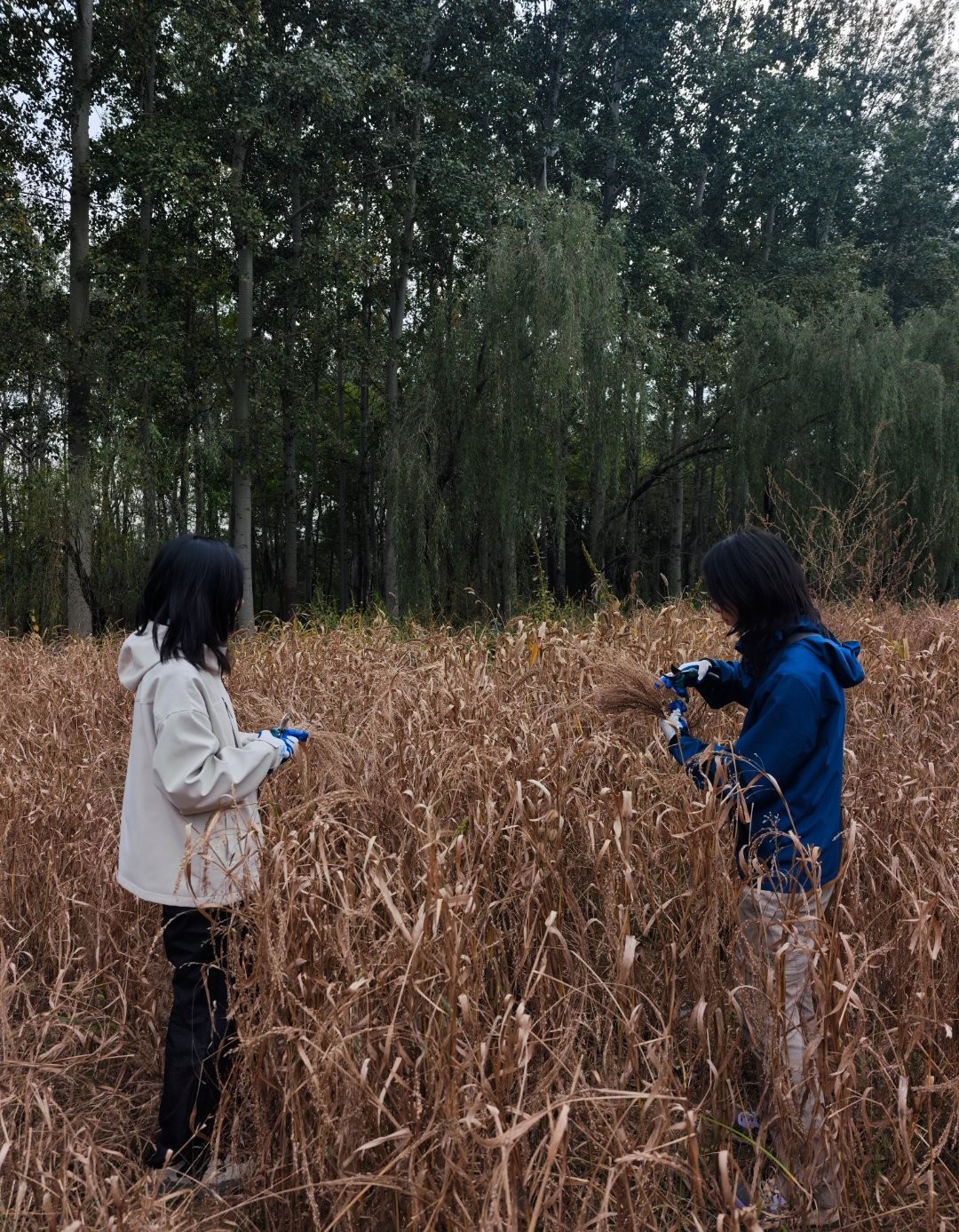
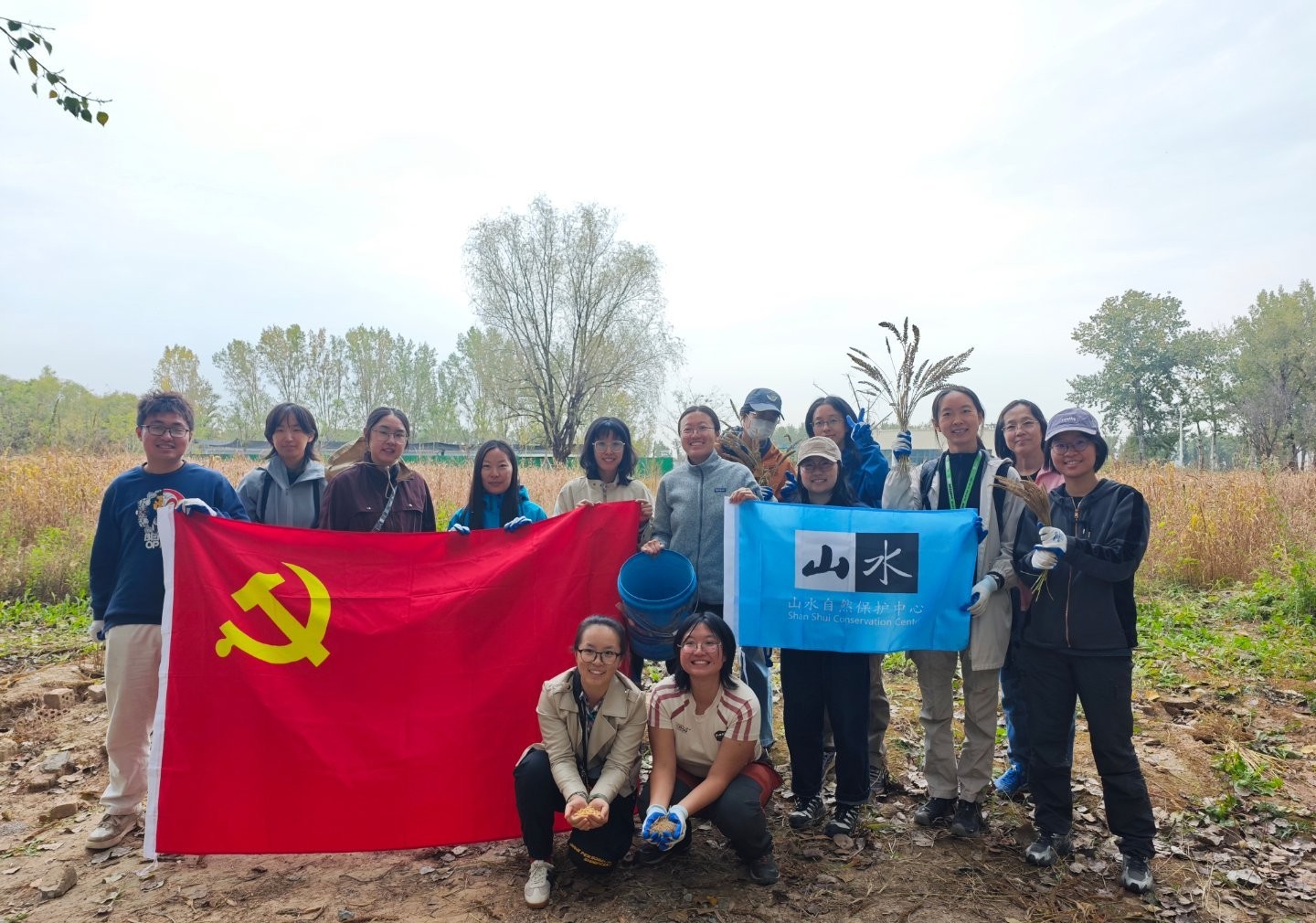
Today, our Beijing office colleagues came to the field for an autumn harvest—for the birds (and, secretly, for a little treat for us humans, too!). Mr. Jin, a local farmer from Sunhe Township, introduced us to these “familiar yet unfamiliar friends” growing in the field and showed us how to harvest them.
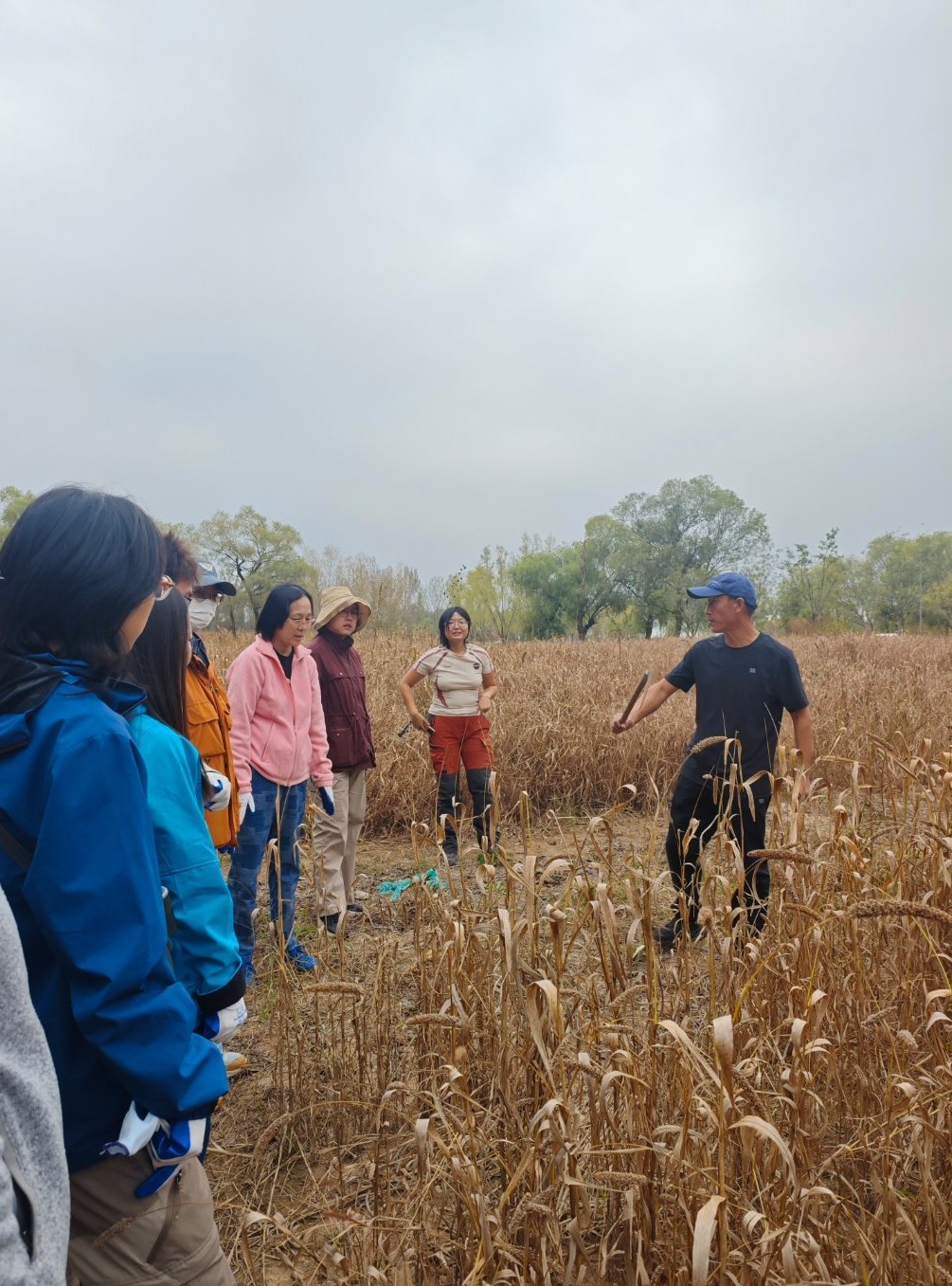
We hadn’t used any pesticides, so insects had been nibbling on both the corn and the soybeans. We tossed the harvested corn cobs onto the ground and stepped on the tall corn stalks to flatten them. Some stood more than twice our height, and the crisp crack as they snapped underfoot was surprisingly satisfying. Some colleagues even tried breaking off pieces of the stalks and tasting them. They were pleasantly sweet, a little like sugarcane.
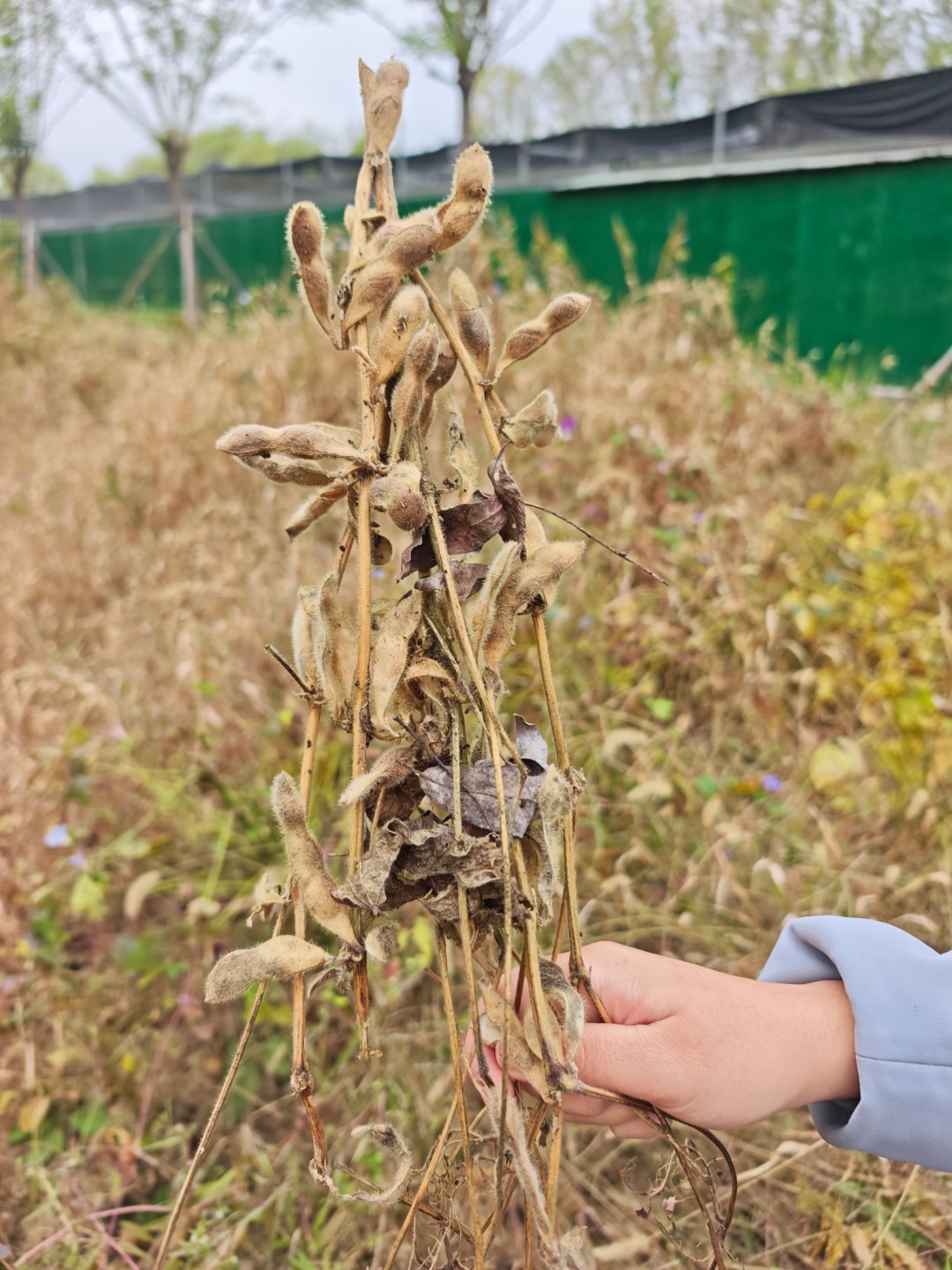
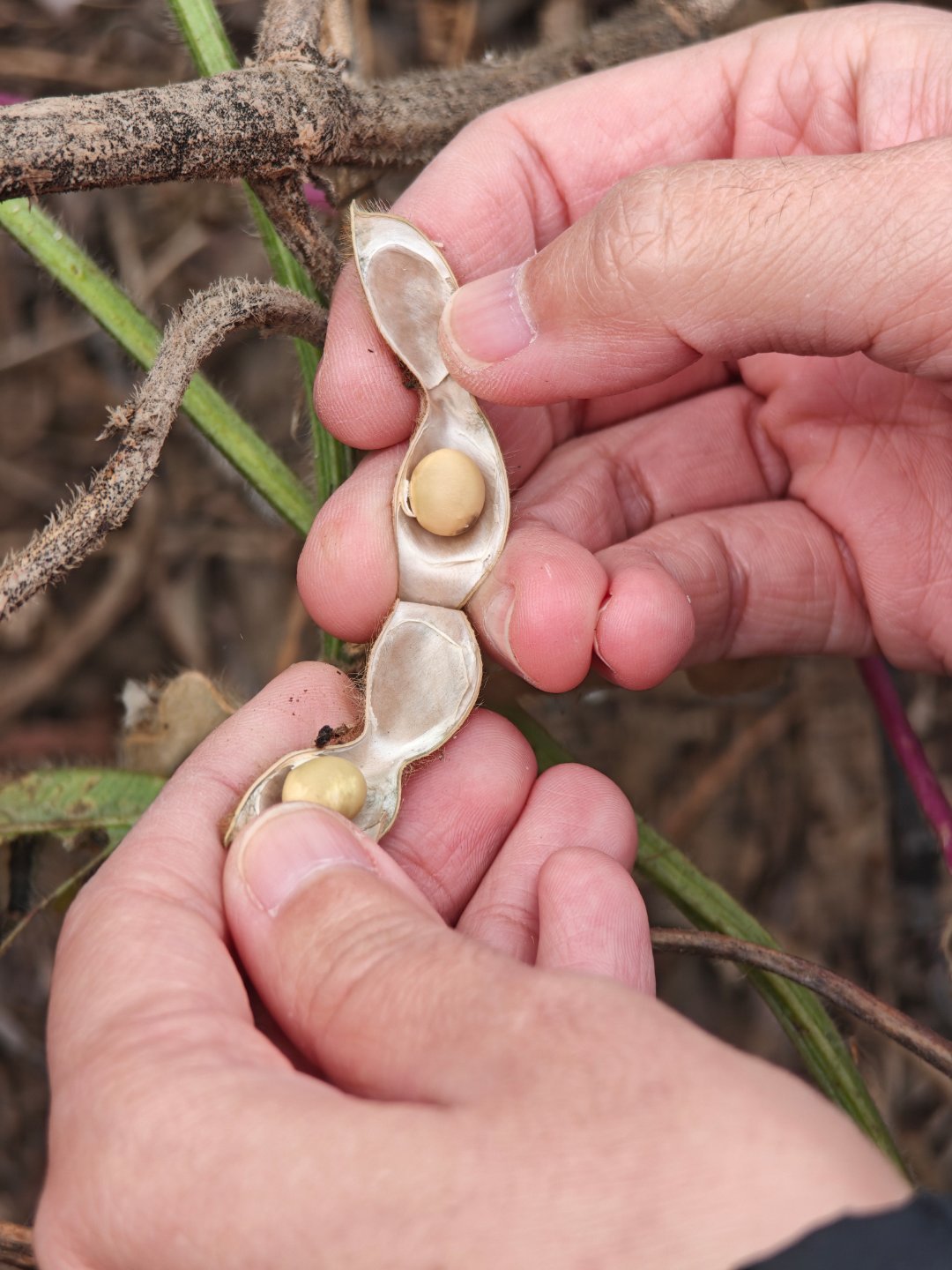
The soybean plants were short and compact. Their grayish-brown pods often blended into the dry, golden-brown plants around them. But crack one open, and out popped bright yellow beans! Mr. Jin told us this was an excellent variety, with beans even bigger than those we usually see in the market. We picked only some of the plumpest beans, leaving the rest for the small animals to enjoy.
 |
 |
The foxtail millet and broomcorn millet needed to be cut with sickles or pruning shears. The slender heads of foxtail millet looked like delicate little bouquets when gathered together, while the thick, cat-tail-like heads of broomcorn millet made each handful feel especially satisfying—a real taste of harvest time.Next came the hands-on part: rubbing the grains off the stalks by hand (yes, actually by hand!).
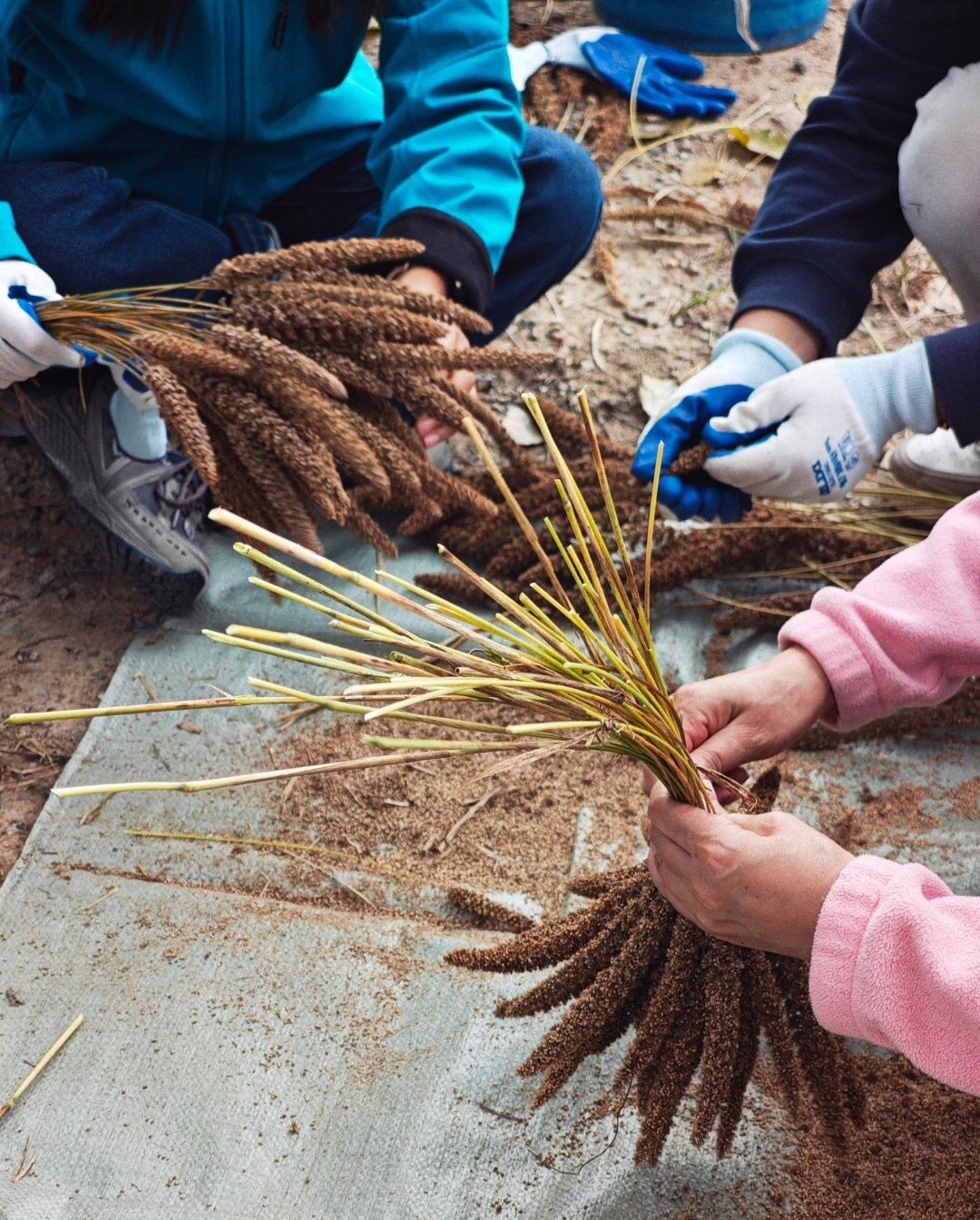
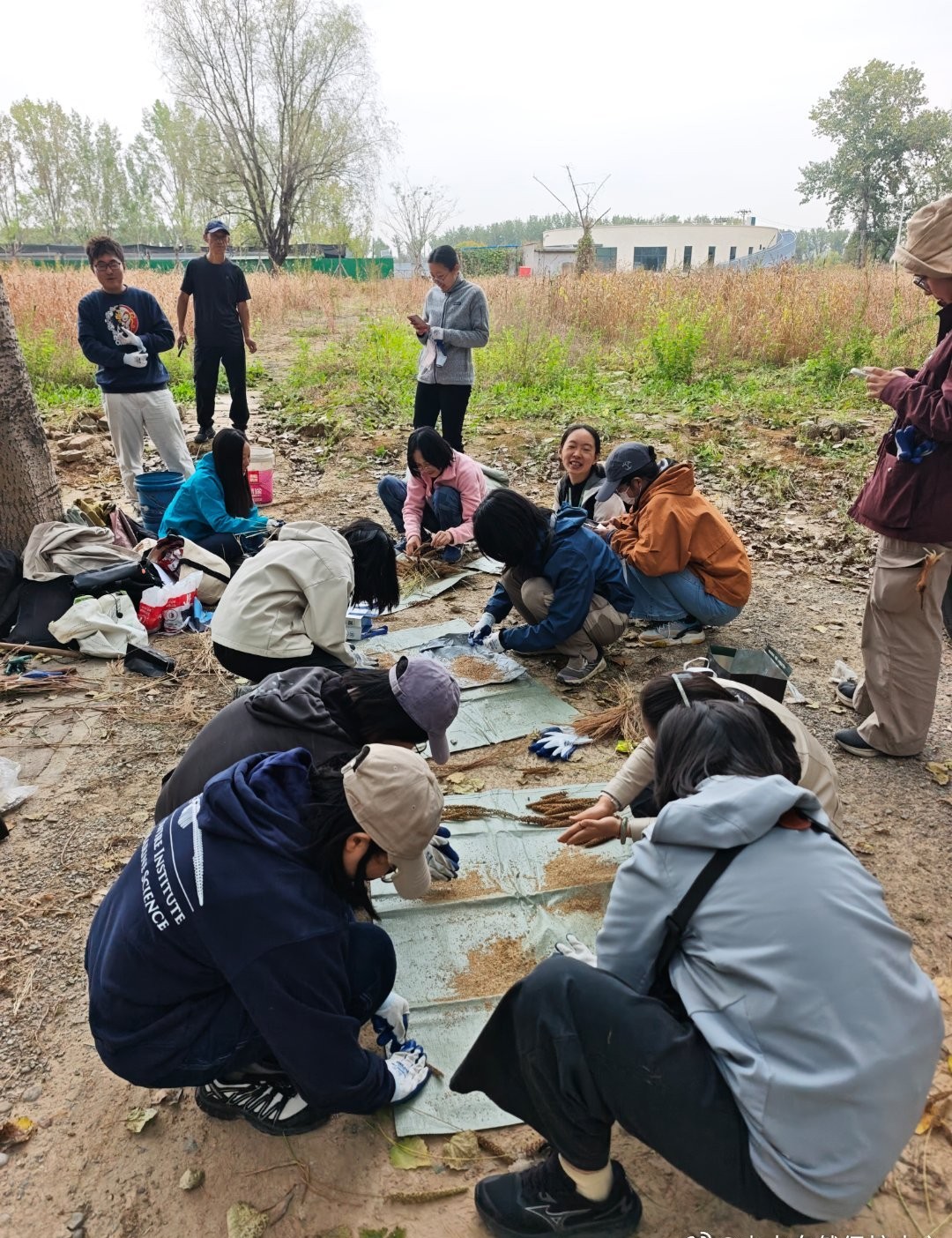
We spread sacks on the ground and divided up the work, chatting as we rubbed the grains loose. Before long, the scene felt just like neighbors catching up on village life. We also left some of the cut millet stalks in the field for wildlife. Even after beating some of the remaining broomcorn millet bundles against a tree, plenty of grains still fell with a soft rustle, ready for the birds to eat.
Crops feed us humans, who cannot make our own food from sunlight the way plants do. In return, we should give something back to the land and the life it supports. Through this harvest, we found ourselves reconnecting with the land and gaining a renewed appreciation for the food it provides. Perhaps that is what harvesting is really about.